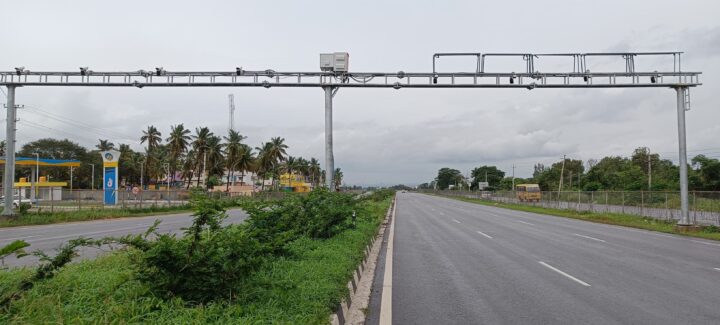





With threats becoming more complex than ever, explosive risks are evolving rapidly, posing serious risks to public safety, critical infrastructure, and transportation networks. A recent operation where authorities seized nearly 2,900 kg of explosives along with weapons and ammunition highlights the scale and sophistication of modern networks moving dangerous materials into civilian areas. Explosives are no longer confined to remote regions, as they are increasingly appearing in urban and semi-urban environments, often hidden in vehicles, cargo, or everyday goods.
Explosive detection systems supported by AI use chemical sensors together with machine learning to bring about rapid and precise detection of explosives. They have the capability of recognizing the different types of explosives, like military-grade, commercial, and homemade, in under 10 seconds.
Explosive trace detection (ETD) devices have been developed as an indispensable solution to handle such threats. This technology is capable of detecting all kinds of explosives, even the highly powerful ones like RDX, in less than a period of 10 seconds, and in case of detection, it instantly informs the corresponding authorities in real time.
Understanding Explosive Detection
Explosive detection uses technology and specialized methods to find explosives before they can be deployed. Conventional methods such as manual inspections, chemical testing, and sniffer dogs have their effectiveness limited to certain situations only. They are slow, operator-intensive, and incapable of covering vast areas efficiently. The contemporary security threats call for systems that are fast, precise, and can oversee several places at the same time, hence enabling the authorities to react instantly.
AI-Powered Explosive Trace Detection
Explosive detection systems supported by AI use chemical sensors together with machine learning to bring about rapid and precise detection of explosives. They have the capability of recognizing the different types of explosives, like military-grade, commercial, and homemade, in under 10 seconds. By analyzing microscopic residues on surfaces, baggage, or cargo, these systems differentiate between harmless substances and explosives, minimize false alarms, and alert authorities in real time.
Key Benefits for Authorities
- Quick Threat Alerts: Detects explosives and notifies the authorities simultaneously, enabling prompt action.
- Wide-Area Monitoring: Capable of continuously monitoring the entire area of airports, railway stations, highways, metro systems, and public events, as well as critical infrastructure, thus outperforming conventional approaches in area coverage.
- Safer for Personnel: Automated detection isolates the suspicious items from direct handling, thereby offering protection to the security staff.
Supporting Proactive Security Measures
Explosive detection offers the most significant advantage of giving the authorities a chance to spot the risks before they come up as incidents. With the help of continuous scanning of high-risk zones and analysis of the trends, these systems facilitate a quick response by law enforcement. The use of ETD systems in airports, transport hubs, and public venues, as well as critical infrastructure, helps to create a security network that has several layers and thus offers better awareness and protection.
Adoption and Effectiveness
The increasing volume and complexity of explosive threats make it necessary for nations to use AI-assisted explosive trace detection (ETD) systems over larger areas instead of keeping them at individual checkpoints. Continual monitoring is needed for especially vulnerable public places of high traffic, transport hubs, airports, metro stations, and critical infrastructures.
Through widespread implementation of these systems, the officials can identify explosives within seconds and be notified instantly, thus giving them the chance to deploy their forces very quickly before any incident takes place. A large-area deployment can thus not only improve public safety but also be a major factor in strengthening national security and the overall controlling strategy against the threats of new and advanced explosives in today’s complex urban and semi-urban environments.
A Vision for Smarter, Future-Ready National Security
A massive initiative across the country is already underway by the government to enhance security through the deployment of explosive detection systems at the major airports. The project will see the integration of cutting-edge trace detectors by the authorities, which include the first microsensor-based explosive trace detector, which can detect the presence of even the smallest quantity of explosives in less than 10 seconds. These real-time alerting systems, along with fast analysis and very accurate results, provide the authorities with the capability to be a step ahead of quickly changing threats.
By making AI-based technology more prevalent in security, the government is looking to set up a more dynamic and uniform screening network all over the country. This innovative trend would not only be powered by native technology but also indicate India’s readiness to have a smarter and more robust security system that is able to pinpoint the dangers before they grow intense.

Guest author Kapil Bardeja is the Co-founder and CEO of Vehant Technologies and Co-founder of Nanosniff Technologies. Bardeja, a postgraduate from IIT Delhi, is a serial entrepreneur with a strong record of incubating and scaling technology-driven companies. Any opinions expressed in this article are strictly those of the author.